

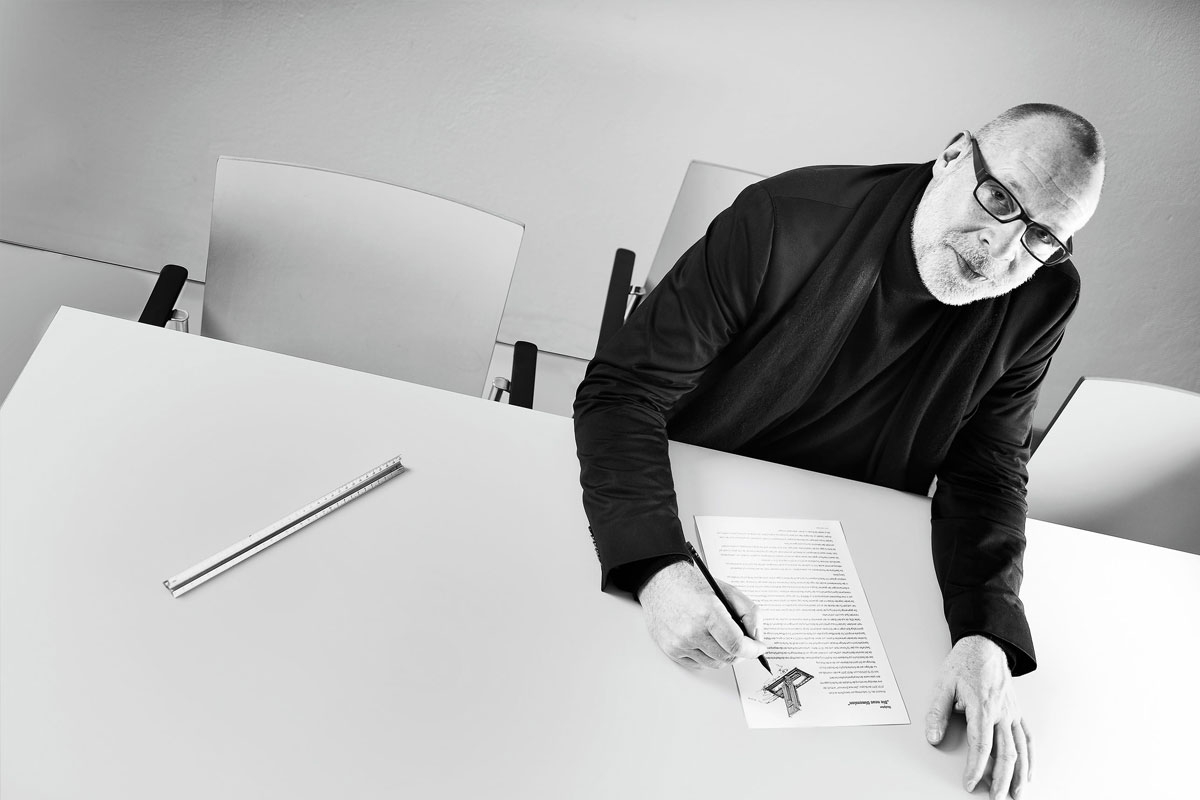
How have you perceived the lightweight construction interest group (Interessengemeinschaft Leichtbau) in the past?igeL has caught my attention over the years. However, more from the angle of overarching technical solutions for lightweight construction.
In your view, what are the advantages of igeL?The advantages of the interest group clearly lie in the diversity of its member companies from the furniture and furniture supply industries, and in the synergies arising from their different offerings.
Where do you see the benefits for the members?igeL makes it possible to draw on the know-how of the individual partners.
What synergies do you see in the partnership with igeL?For me as a designer, the interest group offers the chance to build and maintain contacts with many more companies and to work with them. Unfortunately, the topic of design has been neglected in the past. In terms of design, I see a great opportunity for lightweight construction, since it is also about “visual lightness” and slim profiles, and not exclusively about weight advantages.
How has igeL developed over the last ten years?To be frank, igeL has made great progress over the last ten years in developing new structural connections. Unfortunately, however, the really big breakthrough in the classic furniture industry has not yet really happened.
Where do you see potential for the further development of igeL?The greatest potential lies in the whole topic of structural lightweight construction, in the development toward thin or visually slim-looking materials.
Let's look to the future: where do you see igeL in ten years?The topic of mobility keeps advancing. People will move even more often, and living space will tend to become smaller rather than larger in the future. Because of that, furniture will have to become ever smarter and more multifunctional. I therefore see very great opportunities for structural lightweight construction paired with “visual lightness”.
Which projects should igeL take on?In particular, cooperation between igeL and universities in the fields of design and industrial design, or announcing design competitions for young, creative students, could attract even more attention. This kind of cooperation can bring completely new impulses for the furniture industry.
How do you work with igeL?Personally, I would like to contribute more impulses on the topic of design in the future.
What advantages do you see in lightweight construction?Lightweight construction offers great potential with regard to the mobility and adaptability of furniture.
Which projects are you pursuing in lightweight construction?As a designer, I integrate the topic of lightweight construction, or rather the trend topic “visual lightness”, into my projects.
Which lightweight developments have caught your attention in the past?To this day, Ikea is the greatest milestone in the furniture industry, marketing the use of lightweight construction consistently and very successfully.
What is the difference between lightweight construction and conventional “heavy construction”?The opening up of new possibilities and the opportunities that come with them. What would Ikea be without lightweight construction?
What additional benefit do you see or expect from lightweight products?The end customer has to be able to understand and experience the advantages of the “new lightness”.
How do you perceive the quality and public perception of lightweight products?Public perception is not really good. In the classic furniture industry, lightweight construction is not yet implemented consistently. Ikea is a big and successful exception here. In future, public attention has to be directed more toward “visual lightness” and “mobility” in the sense of adaptability. In the public mind, weight reduction is unfortunately still often associated with lower value.
What was one of the first lightweight products for you?The Ikea side table, which has been on the market since 1979.
Are there lightweight products you particularly like?Ikea handles the topic of lightweight construction excellently. Without lightweight construction, some of its products would not be possible at all.
What opportunities do you see for lightweight construction?If design is integrated even more in future and the focus is placed more on “visual lightness”, I see very great potential in the development and marketing of lightweight construction. Let's seize the opportunities!